


Bubble Vortex
4.430.00 Reviews
App Specs
- Version
- 1.0.2
- Updated On
- License
- Free
- Downloads
- 10,000+
- Developer
- FatMan Studio
- Categories
- Trivia
- Platform
- Android
Screenshots
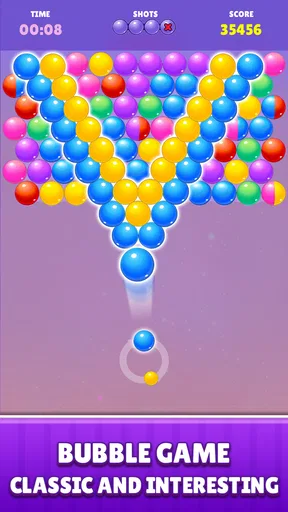
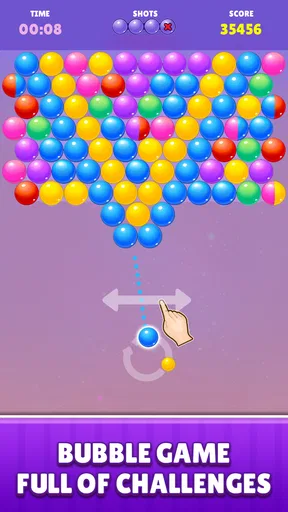
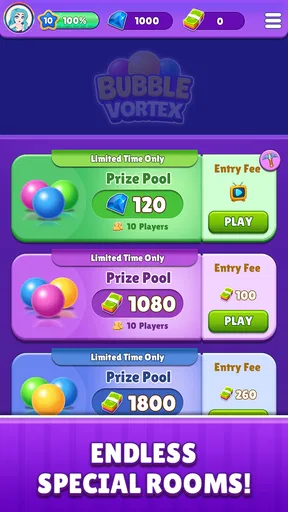
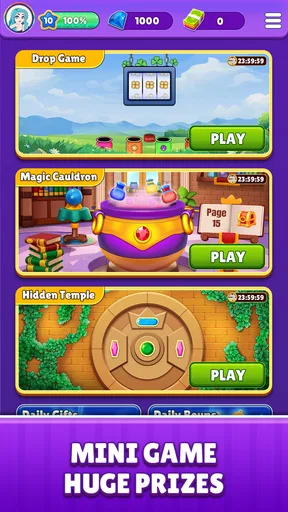
 Analysis by AppCompare
Bubble Vortex is the kind of trivia game I can open when I want a quick burst of activity without committing to a long session. Its central idea is easy to understand: pop bubbles while dealing with a spinning vortex world. That combination gives the game a more active feel than a standard question-and-answer title, even though the basic appeal remains simple and accessible.
After spending time with it, I see the strongest reason to try it as its low barrier to entry. There is no complicated setup to learn, and the Everyone age rating makes it suitable for a broad audience. At the same time, the game is not automatically a perfect fit for every trivia fan. People who want deep subject categories, long-form quizzes, or a carefully structured educational experience may find its bubble-focused format too lightweight. For players who prefer short challenges and visual interaction, however, it has a clear point of difference.
How the first sessions establish a reason to keep playing
The early goal in Bubble Vortex is refreshingly direct: understand how the bubbles behave, react to the changing vortex, and improve your results through repeated attempts. I appreciate that the game does not need a long explanation before becoming playable. The basic loop is readable almost immediately, which matters on a phone because many people will discover it during a spare moment rather than sit down for a formal gaming session.
That simplicity also creates the first important trade-off. A straightforward opening is welcoming, but it can make the first few sessions feel more like testing the controls than pursuing a substantial objective. The game’s appeal depends on whether the bubble action itself remains satisfying after the novelty of the spinning setting fades. I found the early experience most enjoyable when I treated it as a focused reaction challenge rather than expecting a traditional trivia course with detailed lessons.
The vortex gives the opening a useful visual identity. Instead of presenting a static board, it suggests movement and changing attention. This makes each attempt feel more active, even when the underlying task is easy to grasp. I would recommend new players resist rushing immediately. Watching the motion for a moment can help you understand the rhythm, and that small pause is often more useful than tapping at random.
One practical use case is a short break between tasks. I can imagine opening it while waiting for an appointment or taking a quick pause from work, playing a few rounds, and closing it without needing to remember a complicated storyline. That makes it more convenient than many larger puzzle games. It is also a reasonable choice for sharing a phone with a younger player, provided the adult handling the device is comfortable with the presence of optional purchases.
The game comes from FatMan Studio and is free to download. That combination makes trying it fairly easy, but “free” should be read in the normal mobile-game sense: optional in-app items range from $2.99 to $99.99 per item. I would not spend anything during the first sessions. The early loop should prove whether the motion, timing, and challenge suit you before you consider any purchase.
Worth Reading Before You Choose

Flipboard Shows What News Apps Must Do Beyond the Feed

Switching to Android Auto Means Rethinking Your Driving Routine

Google Calendar Makes a Crowded Week Easier to Manage

Ludo King Makes the Most of the Minutes Between Plans

Baby Panda World Brings Quick Play to Modern Phones, but Its Game Library Feels Busy

ESPN’s Live Game View Makes Following Close Games Easier
What progress feels like when the game stays compact
Bubble Vortex communicates progress mainly through the experience of becoming more comfortable with its action. In a game built around popping bubbles in a moving environment, improvement is not always a dramatic unlock or a long checklist. It can be the moment when you stop reacting late, recognize the useful opening, and finish a run with fewer careless taps.
That kind of progress is personal rather than heavily documented, which can be satisfying for players who enjoy self-improvement. I like games where a better result comes from paying closer attention instead of simply waiting for a timer or collecting enough currency. Here, the vortex encourages you to develop a sense of timing. The more familiar the movement becomes, the less chaotic it feels.
The limitation is that players who need visible milestones may want more structure than this format naturally provides. A typical quiz app may offer topic tracks, answer histories, streaks, or clearly labeled lesson paths. A conventional bubble-popping game may focus on level maps and increasingly elaborate objectives. Bubble Vortex sits between those approaches. Its identity comes from combining trivia-style accessibility with active popping, but that also means it may not satisfy someone looking for a deep knowledge record or a large campaign.
My advice is to set a small personal target before each session. Instead of playing without direction, decide to improve your control, make fewer rushed moves, or last longer than your previous attempt. This creates a useful sense of purpose without pretending the game offers a formal achievement system. It is one of the best ways to prevent the short-loop design from feeling disposable.
Another helpful habit is to separate learning the vortex from chasing a result. On the first few attempts, concentrate on how the scene moves and where your attention gets pulled. Once that feels familiar, focus on speed or accuracy. Mixing both goals immediately can make ordinary mistakes feel more frustrating than they need to be. This two-stage approach gives the game a little more depth without adding complexity that is not part of its design.
Difficulty, pacing, and the point where repetition matters
The pacing is built for immediacy. Bubble Vortex does not present itself as a slow, thoughtful quiz where I spend time writing down facts or comparing detailed explanations. Its energy comes from making decisions in a moving visual space. That makes it a better match for players who enjoy quick feedback than for anyone seeking a calm study tool.
The difficulty question is therefore less about memorizing increasingly obscure information and more about maintaining control as the action becomes demanding. The spinning presentation can make a familiar task feel less predictable, especially when attention slips. I found that the game is most engaging when I treated each mistake as a timing problem to solve rather than as evidence that the challenge was unfair.
There is a natural ceiling to this style of design. Once the basic interaction becomes familiar, the game needs enough variation in goals or pressure to keep repeated sessions meaningful. Because I will not invent systems that are not clearly part of the experience, my recommendation is to judge the pacing by your own tolerance for repetition. If you enjoy polishing a simple skill through short attempts, the compact structure can work well. If you need a constant stream of new rules, subjects, or environments, a larger trivia title may hold your attention longer.
Compared with a normal quiz app, this game asks more from your hands and eyes and less from long-term recall. Compared with a conventional bubble shooter, it offers a more trivia-flavored identity rather than relying only on matching colors or clearing a board. That middle position is its main strength. It gives casual players a reason to try something different, while still remaining easy enough to understand without a tutorial-heavy opening.
The pacing also makes it suitable for different moods. When I want something relaxing, I can focus on steady control and avoid treating every attempt as a test. When I want a sharper challenge, I can play more aggressively and accept that mistakes will come faster. This flexibility is valuable, although it depends on the player creating some of the pressure rather than expecting a large progression framework to do all the work.
For families, the Everyone rating is reassuring in terms of broad suitability, but I would still explain the purchase screen to younger players. Free access and optional items can be easy to misunderstand, especially when a child is simply trying to continue playing. I would keep purchasing restricted on the device and let the child enjoy the core activity without treating paid items as necessary for success.
Retention pressure and the free-to-play decision
The main retention pressure comes from the desire to try again and perform better. That is a familiar and effective loop: a short attempt ends, I notice one mistake, and I immediately want another chance. Bubble Vortex benefits from this because its central action is quick to understand. There is little friction between deciding to play and actually doing something.
Still, repeatability is not the same as lasting depth. If the visual motion and popping do not feel rewarding to you, the free entry will not solve that problem. I would rather see the game as a focused casual diversion than as a replacement for a full trivia library. It works best when I accept the narrow scope and use it in short sessions.
The purchase range deserves attention before downloading. Since individual in-app items can cost from $2.99 to $99.99, I would approach the monetization carefully and avoid assuming that every offer represents good value. The safest workflow is to play without buying, decide whether the free experience is already enjoyable, and only then consider whether an optional item addresses a real need. If you dislike mobile games that display paid offers at all, this may not be the right choice.
There is also a useful distinction between wanting more playtime and wanting better play. A purchase may be tempting when I am caught in a losing streak, but frustration is a poor reason to spend money. I recommend closing the game after a few unproductive attempts and returning later. That simple break often improves attention more than any paid shortcut could, and it keeps the experience aligned with its casual strengths.
Players concerned about storage or device compatibility can note that the minimum operating-system requirement is Android 7.0. The current version is 1.0.2, so I would keep expectations realistic about the maturity of the overall package. That does not make it a bad choice, but it does reinforce my advice to treat it as a focused game to sample rather than an enormous platform with years of accumulated content.
Who will enjoy it, and who should choose something else
I would recommend Bubble Vortex to someone who likes short mobile games with a clear action loop, enjoys visual movement, and wants a trivia-themed experience that feels more active than answering one question after another. It is especially convenient for brief sessions, casual family play, and players who enjoy improving through repetition rather than reading extensive explanations.
I would be more cautious recommending it to a serious trivia enthusiast. If your priority is building knowledge across history, science, language, or specialist subjects, a dedicated quiz app will probably be more useful. Those alternatives usually make it easier to track what you know, revisit mistakes, and follow a planned learning route. Bubble Vortex is better understood as a playful hybrid than as a study companion.
I would also point rhythm-game fans toward a more specialized option if they want precise music-based timing, and I would point traditional bubble-shooter fans toward a title built around elaborate level maps if their main interest is strategic clearing. Bubble Vortex’s appeal is the combination, not dominance in either category. That makes it distinctive, but it also means its audience is narrower than the broad store description might suggest.
One question many players will have is whether it is suitable for quick offline-style use. My practical answer is to think of it as a phone game for convenient short sessions, while checking the behavior on your own device before planning a trip around it. Another likely question is whether it is appropriate for children: the Everyone rating supports broad access, but adults should still supervise optional purchases. A third question is whether it replaces a full quiz app; in my view, it does not, because its value comes from action and motion rather than comprehensive knowledge practice.
It is also worth asking whether the game offers enough variety for long daily sessions. I would not choose it with that expectation. Its strongest use is as a repeatable break, not as the only game on your phone. If you already know that you lose interest when a simple mechanic repeats, download it only if the vortex presentation itself sounds appealing enough to carry the experience.
My verdict on the progression and overall fit
Bubble Vortex succeeds when it keeps its goals modest and clear. The early objective is easy to grasp, the progress comes from improving control, and the pacing supports quick attempts without demanding a large time commitment. I like that it gives the familiar trivia category a more tactile direction instead of presenting another static sequence of questions.
Its weaknesses are closely tied to those strengths. The compact loop may not provide enough visible progression for players who want extensive unlocks, deep subject coverage, or a long campaign. The free-to-play structure also deserves caution because optional purchases span a wide range, and I would not treat spending as part of the basic recommendation.
With an average rating of 4.4 from around 381 ratings and more than 10K installs, Bubble Vortex has attracted a modest but positive early audience. Those figures suggest enough interest to make trying it reasonable, while the relatively early version means I would evaluate it on the fun of the current loop rather than on promises about future expansion.
My final advice is simple: install it if you want a free, accessible trivia-flavored game that turns short sessions into a test of attention and timing. Give it a few sessions without purchasing anything, set your own improvement goals, and see whether the spinning presentation keeps the basic action fresh. If it does, Bubble Vortex can be a pleasant pocket game. If you want structured learning, extensive quiz subjects, or a substantial progression campaign, choose a more specialized alternative instead.
Pros
- Fast-paced levels keep short play sessions engaging.
- Simple controls make it easy for new players to start.
- Colorful bubble effects give the game a cheerful look.
- Increasing difficulty provides a satisfying challenge.
- Works well for casual play during short breaks.
Cons
- Later stages can feel repetitive without major gameplay changes.
- Some levels may depend heavily on quick reactions.
- Ads can interrupt the flow between gameplay sessions.
- Progress may feel slow for players who prefer rapid rewards.
- Small bubbles can be difficult to distinguish on compact screens.
FAQs for Bubble Vortex
What is Bubble Vortex and how does the game work?
Bubble Vortex is a bubble-shooting puzzle game built around aiming, matching, and clearing groups of bubbles before the board becomes difficult to manage. Players generally launch colored bubbles toward clusters of the same color to create matches and complete level objectives. As you progress, stages may introduce obstacles, limited shots, special bubbles, and increasingly complex layouts that require more careful planning.
Is Bubble Vortex free to download and play?
Bubble Vortex can typically be downloaded and played without an upfront purchase, making it accessible to casual players who want a short puzzle experience. However, free games may include advertising, optional in-app purchases, extra lives, boosters, or other paid features. Before downloading, check the current Google Play or App Store listing for the exact purchase options, supported devices, and any regional differences.
Does Bubble Vortex require an internet connection?
The basic puzzle gameplay in Bubble Vortex may work without a constant internet connection, which is useful when playing during travel or in areas with limited coverage. Nevertheless, some features can depend on online access, including advertisements, cloud saving, events, leaderboards, account synchronization, and purchases. Availability can vary by version, so test the game offline after installation if this is important to you.
Is Bubble Vortex suitable for children and families?
Bubble Vortex uses simple matching mechanics and is generally easy to understand, making it suitable for many casual players and families. Parents should still review the age rating, advertising policy, and in-app purchase settings before allowing children to play. If the game includes external links, chat, competitive features, or frequent purchase prompts, parental controls and device-level purchase restrictions are recommended.
What should I know about ads, purchases, and game progress before installing?
Before installing Bubble Vortex, be aware that free-to-play puzzle games commonly support themselves through advertisements and optional purchases. Ads may appear between levels or after requesting extra rewards, while purchases can provide boosters, lives, or ad removal. Progress may be stored locally or through an account, so check whether the game offers cloud backup before changing devices or uninstalling it.


